2008 NFL season
Not Without HopeThe 2008 NFL season provides an important prehistory for the four-man fishing trip described in Not Without Hope. It places Marquis Cooper and Corey Smith within professional football while showing how athletic discipline, physical endurance, and team identity shaped the narrator’s understanding of both men before the boat capsized in the Gulf of Mexico.
Marquis Cooper’s Professional Context
Marquis Cooper entered the 2008 NFL season as a twenty-six-year-old linebacker whose career had already included six teams and three stints with the Pittsburgh Steelers. He had been drafted by Tampa Bay in the third round of the 2004 NFL draft and was six feet three inches tall and 215 pounds. Although that size was relatively slight for a linebacker, his unusually muscular build and exceptional strength made him appear far more imposing than his listed weight.
Oakland had signed Marquis Cooper for the latter half of the 2008 season and for 2009. In eight games during the 2008 season, he received the game ball twice for his work on special teams. Those awards support the narrator’s portrait of him as an effective, disciplined player whose value did not depend solely on spectacular visibility. His football career also explains the timing of the fishing trip: he was preparing to leave the Tampa area for Oakland’s offseason training camp, making the outing a farewell gathering before the next stage of his professional life.
Corey Smith’s 2008 Season
Corey Smith’s 2008 season represented a sharply different professional position. He had gone undrafted out of North Carolina State in 2002 but had built a career as a durable and reliable defensive-end backup after joining Tampa Bay as a free agent. He had played on the Buccaneers’ Super Bowl team as a rookie, yet in 2008 he was part of a Detroit Lions team that lost all sixteen of its games. The contrast places individual endurance against collective results: Corey’s personal reputation remained one of reliability even when his team’s season became historically bleak.
Corey’s football identity was defined by persistence rather than star status. In high school, his relentless play had earned him the nickname “the Tasmanian Devil,” and the professional account of his 2007 kickoff-return block reinforced the same image. Playing with a strained hamstring, he told special-teams coach Stan Kwan, “I can give you one more play,” then made two blocks that helped produce a touchdown before limping away from the field. During the 2008 season, the Lions valued him as a team-first player whose toughness and dependability compensated for the physical disadvantages he faced as an undersized defensive end.
After the 2008 season, Corey became a free agent. He nevertheless remained confident that he would find another team by training camp, perhaps within the following month. His brief assurance, “I’ll be fine,” captures the self-possession associated with his football persona, while also marking the uncertainty that surrounded his professional future when he joined the fishing trip.
From Football Identity to the Fishing Trip
The season’s football background also explains the relationship among the men. Nick Schuyler had met Marquis Cooper and Corey Smith through training at a gym, where Nick worked as a personal trainer. Their shared athletic world made physical capability both a bond and a form of mutual recognition. Nick described Marquis and Corey as powerful athletes, and he understood their bodies through the competitive language of lifting, speed, durability, and performance.
Nick’s friendship with Will Bleakley developed through a different route. Will had been a college tight end, while Nick had played defensive line, and the offense-defense divide initially kept them apart. They became friends after discovering that they lived near one another and began sharing rides. The friendship grew through ordinary domestic routines, including dinners and the pasta recipe they called “Betty’s pasta.” Against the public scale of the NFL careers associated with Marquis and Corey, this history gives the group a more intimate structure: professional athletic identity coexisted with rides, meals, family ties, and close friendship.
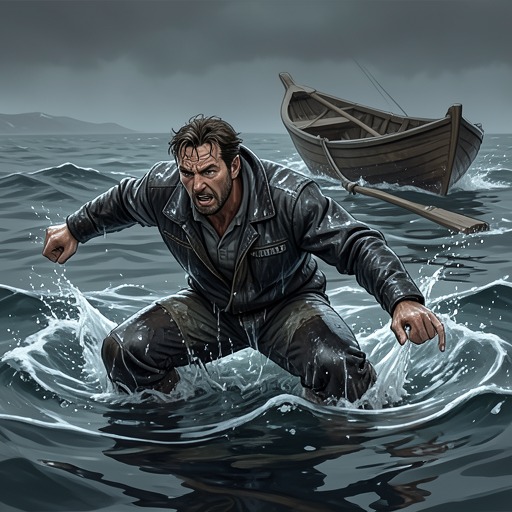
The men’s athletic backgrounds also shaped their conduct after the boat overturned. Nick remembered them as young, strong, tough, and brave, yet those qualities did not make them invulnerable. When attempts were made to free the anchor, the group was not recklessly intoxicated: Corey did not drink, Nick had consumed a beer and a half but vomited it, and Marquis and Will had consumed several beers over roughly ten hours while remaining apparently clearheaded. The disaster therefore cannot be reduced to drunken behavior or irresponsible horseplay, a distinction central to Nick’s later effort to correct rumors about what happened.
Public Meaning After the Disaster
The 2008 NFL season became more significant retrospectively because two of the missing men had professional football identities. When the Coast Guard confirmed that four men were missing, officials expected high media interest, particularly after identifying Marquis Cooper and Corey Smith as NFL players. Their athletic affiliations made the search a public story as well as a private family crisis, increasing attention to the disappearance and shaping how outsiders understood the men.
That public identity continued after their deaths. Three weeks after the accident, the Detroit Lions announced that no player would wear Corey Smith’s number 93 during the 2009 season. The decision transformed a jersey number associated with the 2008 Lions into a memorial emblem, while teammates and staff recalled the relentless way Corey had worked and played. His professional reputation survived not as a record of individual glamour but as a collective memory of effort, toughness, and loyalty.
Marquis’s connection to the 2008 season likewise remained active in the 2009 NFL season. During an Oakland Raiders victory over the Philadelphia Eagles on October 18, a pigeon flew downfield in formation with the kickoff-coverage team, and several Raiders players interpreted it as representing Marquis Cooper’s spirit. At a later Raiders victory over the Cincinnati Bengals, the team dedicated the game to Marquis; Rebekah Cooper and Delaney Cooper attended and received the game ball. Delaney’s apparent belief that she was going to see her father play made the memorial especially painful, because the football setting preserved the shape of a familiar family experience while revealing his permanent absence.
Significance in the Narrative
The 2008 NFL season is not merely a date marker. It supplies the language through which the book initially presents Marquis Cooper and Corey Smith: size, strength, competition, perseverance, team loyalty, and the expectation that an athlete will continue despite pain. Those qualities help explain why Nick regarded the men as formidable companions, but the sea exposes the limits of that confidence. Two professional football players, a college athlete, and a highly conditioned personal trainer remained vulnerable to cold water, exhaustion, waves, and the overturned boat.
The season also creates a tension between public recognition and private loss. The NFL made the disappearance more visible, and later memorials gave numbers, victories, and football rituals to the mourning. Yet Nick’s account insists that Marquis and Corey were not simply athletes connected to a news story. They were friends, sons, husbands, fathers, and companions whose athletic biographies formed only one part of lives abruptly ended. In that sense, the 2008 NFL season frames the disaster without explaining it: it shows the strength the men brought to the water, while the narrative’s central question remains why that strength saved only Nick Schuyler.